Health and Safety Policy — Twickenham Skip Hire
 Twickenham Skip Hire is committed to maintaining the highest standards of health and safety across all aspects of our skip hire and rubbish removal operations. This policy sets out our approach to managing risks associated with waste collection, skip placement, vehicle movements and on-site handling of materials. It applies to all employees, contractors and visitors involved in our rubbish collection and skip hire services, and will be reviewed regularly to ensure continuous improvement and legal compliance.
Our objectives are simple: to prevent injury, protect health and to minimise environmental harm arising from our waste management and rubbish disposal activities. Prevention is central to our approach — by identifying hazards early and implementing robust controls we reduce the likelihood of incidents. This policy is supported by documented procedures, training programmes and operational checks designed to ensure safe and efficient skip hire services and rubbish removal across our service area.
 The company management team has overall responsibility for health and safety and will ensure adequate resources are available. Supervisors and site operatives share day-to-day responsibility for implementing safe systems of work. All staff are expected to co-operate and take reasonable care for their own safety and that of others. Line managers will ensure that employees are competent for their roles and will monitor performance through regular inspections, toolbox talks and safety briefings.
Risk assessment is the core process that informs how we manage hazards in skip hire and rubbish disposal operations. We carry out dynamic and pre-task assessments for activities such as loading skips, transporting waste, siting containers and working near roads. Controls include clear exclusion zones, traffic management when placing skips, and the use of banksmen or spotters for vehicle manoeuvres. Hazardous loads are identified prior to collection and handled in accordance with specialist procedures.
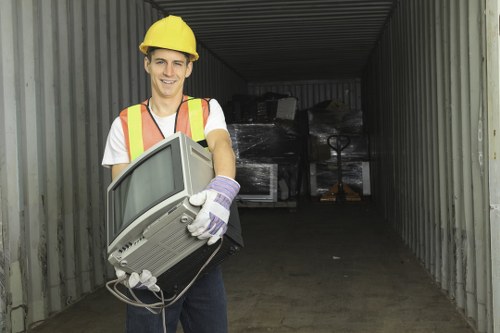
 Personal protective equipment (PPE) is provided based on identified risks and must be worn as specified. This includes high-visibility clothing, safety boots, gloves and appropriate respiratory protection where dust or fumes may be present. Training covers correct selection, fitting and maintenance of PPE alongside practical instruction on safe lifting, manual handling techniques and the use of lifting aids to reduce musculoskeletal injuries during rubbish handling.
Safe placement and use of skips is essential to protect the public and our workforce. When siting skips we consider pedestrian access, sightlines, underground services and proximity to traffic. Skips will be securely positioned and clearly marked using reflective signs and cones where required. Our waste removal teams follow safe loading limits and segregation rules to prevent overloading and contamination — ensuring efficient rubbish collection and compliant waste disposal.
Vehicles and drivers are subject to strict safety controls. Drivers receive training on safe driving practices, vehicle loading, securing loads and daily vehicle inspection routines. Mechanical checks are recorded and roadworthiness is maintained to industry standards to reduce the risk of incidents during transit associated with skip delivery and rubbish collection services. Safe reversing procedures and use of spotters protect operatives and the public when vehicles operate on site.
 We maintain clear procedures for dealing with hazardous materials and unexpected finds. If potentially dangerous waste is discovered, operations are suspended and the item isolated until specialist advice is obtained. Emergency response arrangements cover fire, spillage, first aid and environmental containment to limit harm. All incidents, near-misses and unsafe conditions must be reported promptly and will be investigated to identify root causes and corrective actions.
 Monitoring, audit and review are essential to the effectiveness of this health and safety policy. Regular inspections, scheduled audits and performance indicators track compliance across rubbish collection, skip hire services and waste disposal tasks. Findings lead to targeted improvements, additional training or changes in procedure. Management will review this policy annually or sooner if operational changes, incidents or new legislation require it. The policy is endorsed by senior management and communicated to all staff; it forms part of our commitment to delivering safe, reliable and responsible skip hire and waste removal services.
Key Responsibilities
- Senior Management: Provide leadership, resources and oversight for health and safety.
- Supervisors: Ensure safe systems of work, risk assessments and staff competence.
- Employees: Follow instructions, use PPE and report hazards or incidents without delay.
Continuous Improvement
We strive for continuous improvement through training, consultation and performance review. The company will maintain records of training, inspections and incident reports and will use these to inform future safety measures. This document is a living policy and will be updated to reflect changes in operations, lessons learned from incidents and advances in waste management practice. Everyone engaged in our skip hire or rubbish removal activities is expected to support the policy and help create a safe working environment.
Signed on behalf of Twickenham Skip Hire